5 Senses of Children: Sensory Play at Siam Paragon
Explore the 5 senses through Sensory Play, understand Active Learning, and discover learning experiences at Siam Paragon.
Table of contents
- 1. See and Connect — When Sight Opens the Door to Learning
- 2. Listen and Immerse — Sounds Are Part of Learning
- 3. Smell and Imagine — When Scents Help Discover the World
- 4. Taste and Discover — When Flavor Opens New Experiences
- 5. Touch and Create — When Hands Become Learning Tools
For children, a simple walk can become a new discovery at every step. Children learn about the world by exploring the things around them. A walk can bring many things to notice, from new sights and sounds to different foods, objects, and living things. Each experience can spark curiosity.
Using all 5 senses creates a link between Sensory Play and Active Learning. Children do more than receive information. Observation, questions, experiments, and real experiences can turn an ordinary walk into a learning moment.
5 Senses and Learning Along the Way
Siam Paragon may be a place for meeting others or shopping from an adult perspective. For children, the same place can be full of things to explore in different ways. Each area and experience can spark learning in many forms.
The 5 senses work together during the learning process. Children can observe the surroundings, ask questions, connect new information with past knowledge, and learn from experiments and new experiences.
This article explores how each sense helps children observe, discover, and understand the world around them. The experiences can also support a better understanding of personal thoughts and feelings.
1. See and Connect — When Sight Opens the Door to Learning
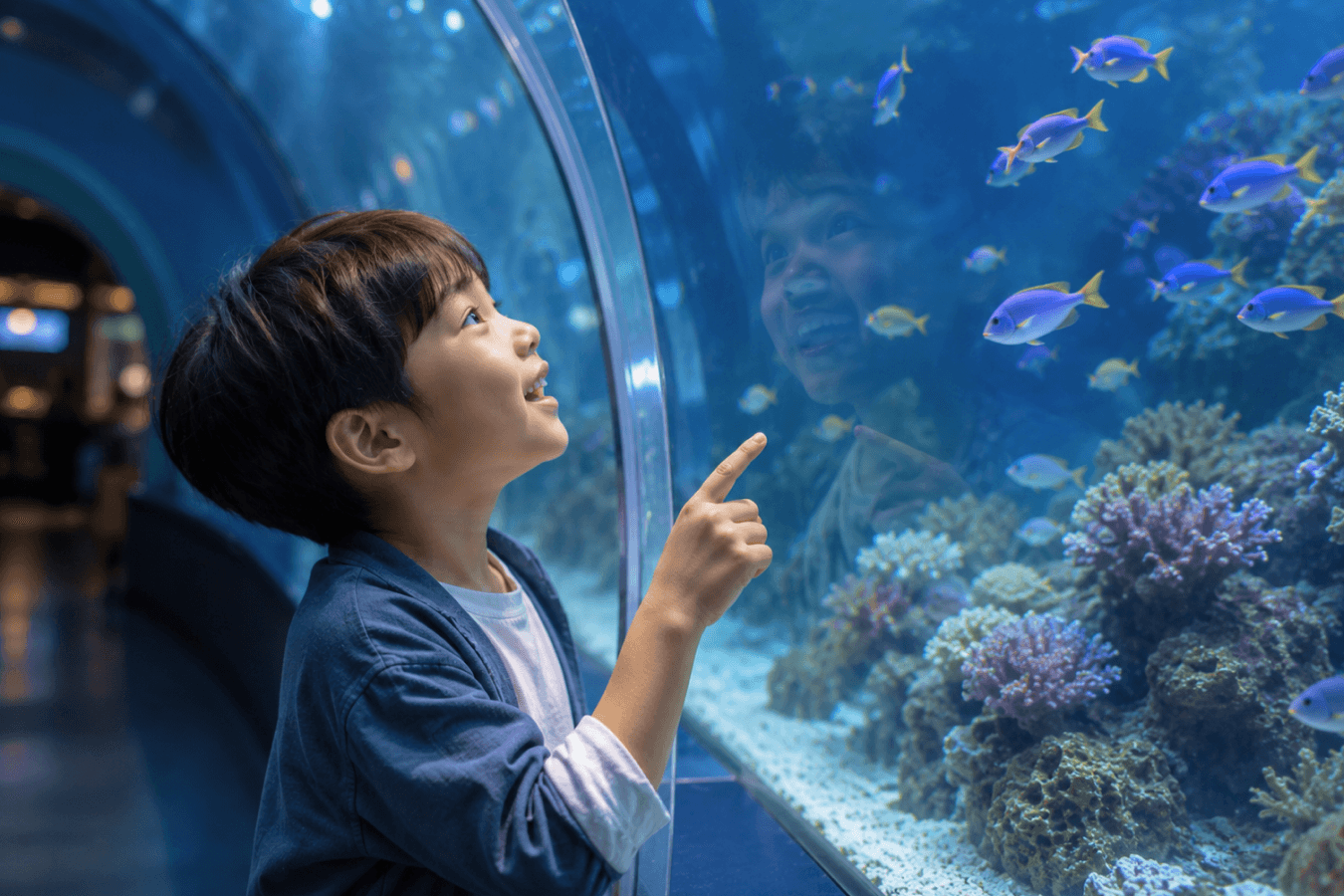
Sight is one of the first ways children explore the world. Colors, shapes, sizes, and movements help children notice details, make comparisons, and connect new things with past knowledge.
Differences can lead to simple questions such as, “Why is this one a different color?” or “Why does this one swim faster?” The process connects with Visual Thinking, where observation becomes a starting point for thinking.
What children may learn through sight
- Colors — Bright or different colors attract attention and encourage comparisons between objects.
- Shapes and Sizes — Different shapes and sizes help children notice details and group objects.
- Movement — Changing movements attract attention and encourage children to follow what happens next.
For learning through observation:
- SEA LIFE Bangkok Ocean World – An opportunity to observe marine animals and compare different colors, shapes, sizes, and movements | Floor B
2. Listen and Immerse — Sounds Are Part of Learning
Children also learn from sounds around them. Voices, music, activity sounds, and the sounds of different places can all become part of the learning experience. Listening helps children identify sounds, remember them, and connect sounds with events.
What children may learn through listening
- Rhythm — Slow or fast sounds and repeated patterns help children follow and remember sound sequences.
- Tone — Different tones help children notice emotions and changes in the atmosphere.
- Volume — High and low sounds, or loud and soft sounds, help children notice differences and connect sounds with activities.
For learning through sound:
- Paragon Cineplex – An opportunity to explore sound through dialogue, music, and sound effects, while noticing differences in each scene | Floor 5
3. Smell and Imagine — When Scents Help Discover the World
Smell is closely linked to memory. A familiar scent may bring back a place or moment, while new scents from plants and fresh air can spark questions such as, “What is this smell?” and “Where does it come from?”
What children may learn through smell
- Different Scents — Scents from plants, flowers, and nature help children notice differences between smells.
- Sources of Scents — Different smells encourage children to observe the surroundings and find where each scent comes from.
- Feelings from Scents — Certain scents can feel refreshing or relaxing, while others may spark curiosity.
For learning through smell:
- NEXTOPIA – An opportunity to explore nature through green spaces and living things while noticing scents from plants and the surrounding atmosphere | Floors 5–5A, NEXTOPIA
4. Taste and Discover — When Flavor Opens New Experiences
Tasting is different from seeing or listening because it requires direct experience. Children may feel hesitant at first, but trying different foods can help children notice flavors, textures, and temperatures while becoming more open to new experiences.
What children may learn through taste
- Flavor — Sweet, salty, sour, or bitter flavors help children compare different tastes.
- Texture — Crunchy, soft, chewy, or creamy textures help children notice how different foods feel.
- Temperature — Hot, cold, or room-temperature foods help children notice differences while eating.
- Trying New Things — Trying different foods can help children become familiar with new flavors and experiences.
For learning through taste:
- Bread Ahead – A popular London doughnut and bakery brand. It offers fresh pastries and a Live Baking Theatre. Children can explore the taste, color, and shape of pastries. | Floor G | Starting from ฿75
- Gelateria kitokki – A variety of gelato flavors and textures for comparing tastes and discovering preferences | Floor 5, NEXTOPIA | Starting from ฿135
5. Touch and Create — When Hands Become Learning Tools
Touching real materials, surfaces, shapes, and objects allows children to learn through direct experience. Hands-on activities offer chances to experiment and discover through action, rather than only looking at something.
The idea connects with Learning by Doing, which is part of Active Learning. Children take part in the learning process through real hands-on activities.
What children may learn through touch and hands-on activities
- Fine Motor Skills — Picking up, holding, squeezing, turning, or connecting pieces helps develop fine motor control and hand-eye coordination.
- Creativity — Choosing materials or designing objects gives children space to create and try new ideas.
- Problem Solving — When a creation does not turn out as expected, children can change methods, replace pieces, or find a new solution.
- Experimentation — Hands-on experiments show the results of different actions and create chances to learn from each result.
For learning through building and creating
- LEGO – An opportunity to pick up blocks, build, and experiment with hands-on construction. Trial and error can support learning while creating new designs | Floor 3
How Does Sensory Play Connect with Active Learning?
If children learn through sight, sound, smell, taste, and touch, how different can such learning be from simply listening?
The answer may lie in “experience.” Sensory Play allows children to explore through the senses, while Active Learning happens through observation, questions, experiments, and hands-on activities.
The process can be viewed through 3 key stages
- Sensory Experience — Children use their senses to learn from real experiences, including sight, sound, smell, taste, and touch. These experiences become a starting point for exploring the world.
- Active Engagement — Curiosity can lead to participation through questions, experiments, comparisons, and trial and error.
- Meaning Making — After taking action and seeing the results, children can connect new experiences with past knowledge and build understanding.
Exploring the world can also support empathy, care, responsibility, and a stronger connection with nature. Learning therefore goes beyond what children “know” to include understanding and feelings toward the world and living things around them.
Because Every Step Can Be a Learning Opportunity at Siam Paragon
A day at Siam Paragon can be more than time spent together. Children can observe, ask questions, experiment, and discover new things through all 5 senses. Everyday experiences can become moments of curiosity and discovery.
Siam Paragon also offers many spaces that can support further learning. A single outing can create more than a memory. Curiosity, creativity, understanding, and new perspectives can grow through each experience.
Turn an ordinary day into a learning opportunity and discover what children can learn at every step of Siam Paragon.
Opening Hours: Open daily 10:00 AM–10:00 PM
Getting There: BTS Siam Station (with a direct walkway connecting to the shopping center)
